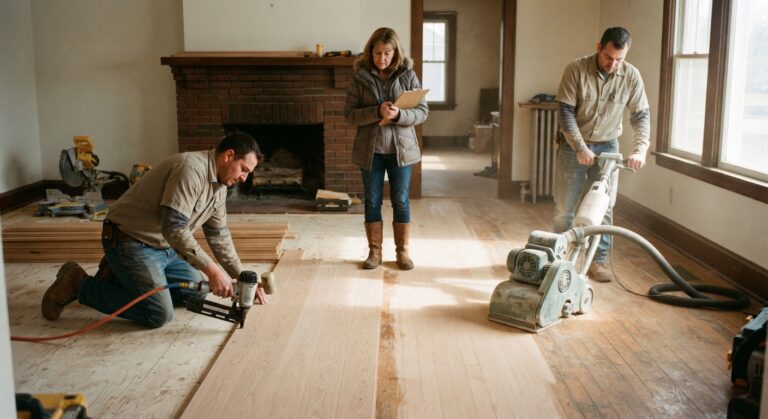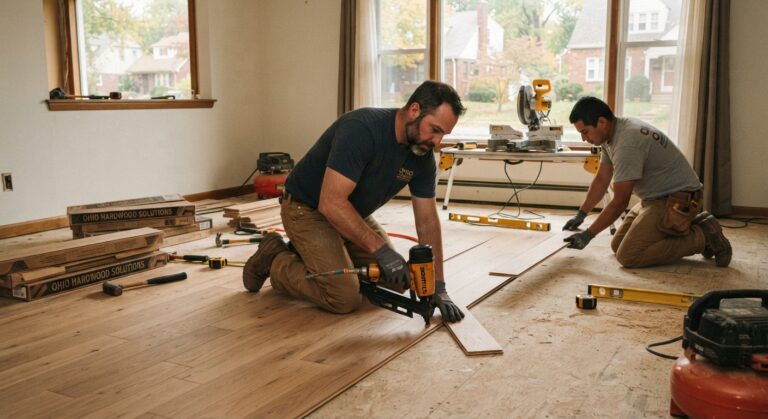
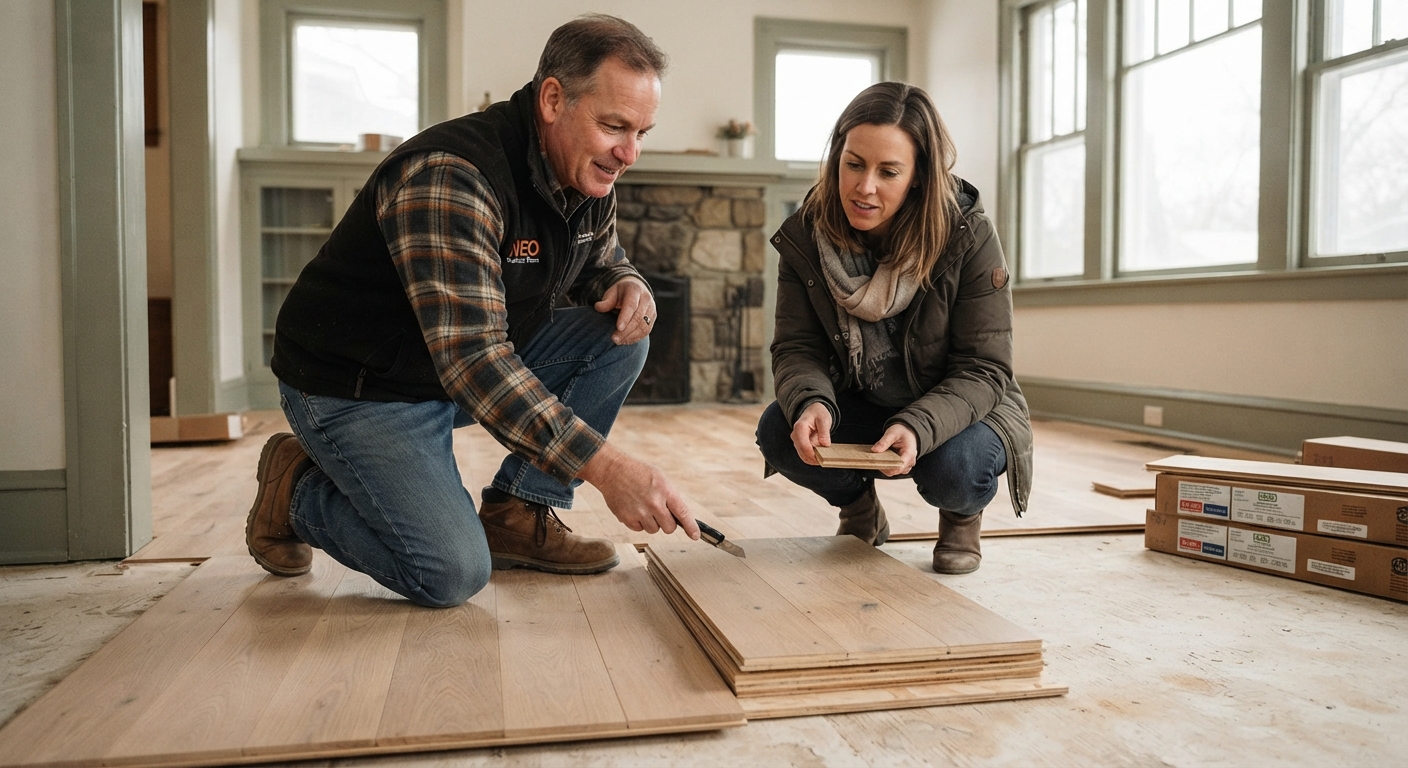
For Northeast Ohio homes, engineered hardwood is often the better long-term performer because it handles the region’s humidity swings better than solid wood, while still delivering the authentic hardwood look homeowners want. Solid hardwood remains an excellent choice for above-grade installations in climate-controlled rooms. TH Custom Hardwood’s hardwood installation team serves Cleveland, Akron, Canton, and surrounding communities and can recommend the right product and species for each home’s specific subfloor, grade level, and HVAC conditions. Engineered hardwood is also compatible with radiant heat, which solid wood is not. Both types can be refinished, though solid wood supports more refinishing cycles over its lifetime. The best choice depends on where in the home the floor will be installed and how stable the indoor humidity is year-round.
Why Northeast Ohio’s Climate Matters for Hardwood Selection
Northeast Ohio experiences significant seasonal humidity swings: muggy summers push indoor relative humidity into the 60 to 70 percent range, while forced-air heating in winter can drop it to 20 to 30 percent. Wood is hygroscopic, meaning it absorbs and releases moisture as humidity changes. That movement causes expansion in summer and contraction in winter. Choosing the right hardwood type and species minimizes the visual gaps, cupping, and crowning that can develop when wood moves excessively.
The difference between solid and engineered hardwood comes down to how each product handles that movement. Solid hardwood is milled from a single piece of wood and moves more dramatically with humidity changes. Engineered hardwood is built from multiple layers of wood pressed together in alternating grain directions, which significantly limits expansion and contraction. For Ohio homes without a whole-house humidifier or with fluctuating indoor climate control, engineered hardwood reduces the risk of seasonal movement problems.
Solid Hardwood: Strengths and Limitations for Ohio Homes
Solid hardwood is ¾-inch thick and can be sanded and refinished eight to twelve times over a typical 80 to 100-year lifespan. That longevity is its greatest advantage. A solid hardwood floor installed in a Northeast Ohio home today can outlast the house itself if maintained properly. It must be glued or nail-fastened to a wood subfloor and is not recommended for installation below grade (basements) or over radiant heating systems.
In above-grade living areas with stable climate control and a properly installed humidification system, solid hardwood performs beautifully in Ohio homes. The key is managing indoor humidity within the 35 to 55 percent range year-round. TH Custom Hardwood’s installation team includes a subfloor assessment and acclimation guidance in every project to set solid hardwood installations up for long-term success.
Engineered Hardwood: Why It Works Well in Northeast Ohio
Engineered hardwood’s cross-ply construction makes it dimensionally stable across a wider humidity range. It can be installed at grade, above grade, or in basements with proper moisture barriers, and it is compatible with radiant heat floors. The wear layer on quality engineered hardwood is thick enough to be sanded and refinished two to four times, which is sufficient for most homeowners over a 25 to 40-year replacement cycle.
For Northeast Ohio homes where the basement is being finished, where radiant heat is installed, or where the HVAC system is not tightly humidity-controlled, engineered hardwood is the lower-risk, better-performing choice. TH Custom Hardwood installs both solid and engineered hardwood and can discuss which best fits the specific room, subfloor type, and budget during an in-home estimate.
Frequently Asked Questions
Which is more expensive, solid or engineered hardwood flooring in Northeast Ohio?
Material costs are comparable for mid-grade products. Premium engineered hardwood can cost more than entry-level solid wood. Installation labor is similar. The total project cost depends more on species, finish, room prep, and subfloor condition than on whether the product is solid or engineered. TH Custom Hardwood provides detailed estimates for both options so you can compare accurately. Contact the TH Custom Hardwood team to schedule an in-home quote.
Can engineered hardwood be refinished in Northeast Ohio homes?
Yes. Quality engineered hardwood with a wear layer of 3mm or thicker can be sanded and refinished two to four times. That is sufficient for most homeowners. Thinner wear layers (1 to 2mm) support one or fewer refinishing cycles. TH Custom Hardwood’s refinishing service can assess your current floor’s remaining wear layer and advise on refinishing options before recommending replacement.
Is solid hardwood always better for historic or high-end Northeast Ohio homes?
Solid hardwood has a traditional appeal and a longer refinishing lifespan that suits historic restoration projects where authenticity matters. However, for modern high-end homes where radiant heat or above-average humidity fluctuations are factors, premium engineered hardwood with a thick wear layer and a genuine wood top is an equally respectable choice that performs more reliably in Ohio’s climate.
What width plank is best for Northeast Ohio homes?
Narrower planks (2.25 to 3.25 inches) show less visible movement from seasonal humidity changes than wide-plank boards (5 inches and above). Wide planks are popular aesthetically but require tighter indoor humidity management in Northeast Ohio to avoid gapping. TH Custom Hardwood discusses plank width, species, and grade during in-home consultations to match the product to the home’s specific conditions.
Do I need underlayment for hardwood flooring in a Northeast Ohio home?
Nail-down installations over wood subfloors typically do not use underlayment. Floating engineered hardwood installations benefit from a foam or cork underlayment that provides cushion, reduces noise, and adds a minor moisture barrier. Glue-down installations use the adhesive itself as the interface layer. TH Custom Hardwood’s installation team specifies the correct underlayment for each installation type and subfloor condition.
Can hardwood flooring be installed over a concrete slab in Northeast Ohio?
Engineered hardwood can be glued or floated over concrete slabs at or above grade with a proper moisture barrier. Solid hardwood cannot be glued directly to concrete. If you have a slab subfloor in a living area or finished basement, engineered hardwood or a floating engineered product is the appropriate choice. TH Custom Hardwood performs moisture testing on concrete slabs before any hardwood installation to verify that conditions are within safe limits.